Have you ever wondered about what the fire safety requirements are for commercial buildings? Probably not; unless you happen to have ever been in a commercial building that was on fire. But, rest assured, there are strict safety requirements for commercial buildings.
Below is an overview of the key fire safety requirements:
-
Fire Protection Systems
- Fire Sprinklers: Required in many commercial buildings, especially those over a certain size or occupancy type. NFPA 13 governs design and installation.
- Fire Alarms: Systems must detect smoke, heat, or flames and alert occupants and emergency responders.
- Fire Extinguishers: Portable fire extinguishers must be readily accessible and appropriately sized and rated (e.g., Class A, B, C).
-
Means of Egress
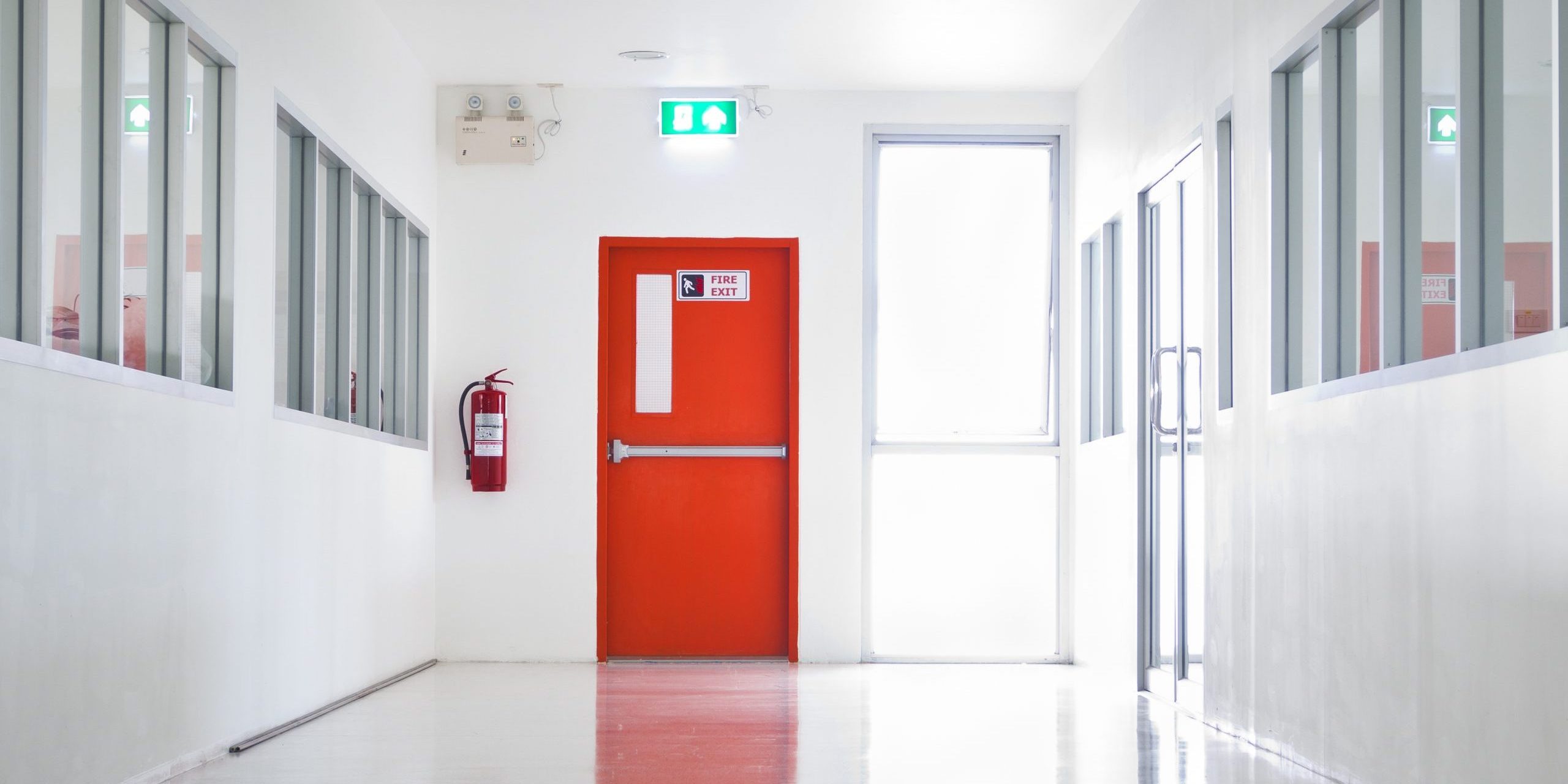
- Exits: Buildings must have clearly marked, unobstructed exit paths.
- Exit Signs & Emergency Lighting: Required to guide occupants during a power outage or low-visibility conditions.
- Accessibility: Exits must be usable by all occupants, including those with disabilities.
-
Building Construction & Materials
- Fire-Resistive Construction: Certain walls, doors, and structural elements must resist fire for a designated time (e.g., 1- or 2-hour rated).
- Fire Doors: Must be self-closing and remain closed (or close automatically) during a fire.
- Smoke Barriers: Often required to limit the spread of smoke within large or multi-use facilities.
-
Fire Safety Plans & Inspections
- Emergency Action Plans: Must be developed and practiced regularly, especially in high-occupancy buildings.
- Routine Inspections: Fire systems (sprinklers, alarms, extinguishers) must be inspected and maintained regularly, often annually or semi-annually.
- Employee Training: Staff should be trained on fire safety, extinguisher use, and evacuation procedures.
-
Compliance & Local Codes
- Permit Requirements: Fire safety system installations typically require permits and fire safety inspections.
- Local Fire Marshal: Enforces compliance and may conduct regular inspections.
- Occupancy Type & Use: Requirements vary based on whether the building is an office, warehouse, restaurant, healthcare facility, etc.
These requirements were put together by industry professionals in order to protect lives, property, and business continuity. Requirements vary by location, but most are guided by national codes such as the National Fire Protection Association (NFPA) standards and International Building Code (IBC).